
SEO is a dynamic monster, and it is important to always be ahead of the curve, and whoever wants to rule the search engine result pages. What was ideal and perfect last year may be a thing of the past tomorrow. In the future, the main principles of value delivery to users are not going to change until 2026, yet the complexity of providing this value as an identification and reward methodology progresses.
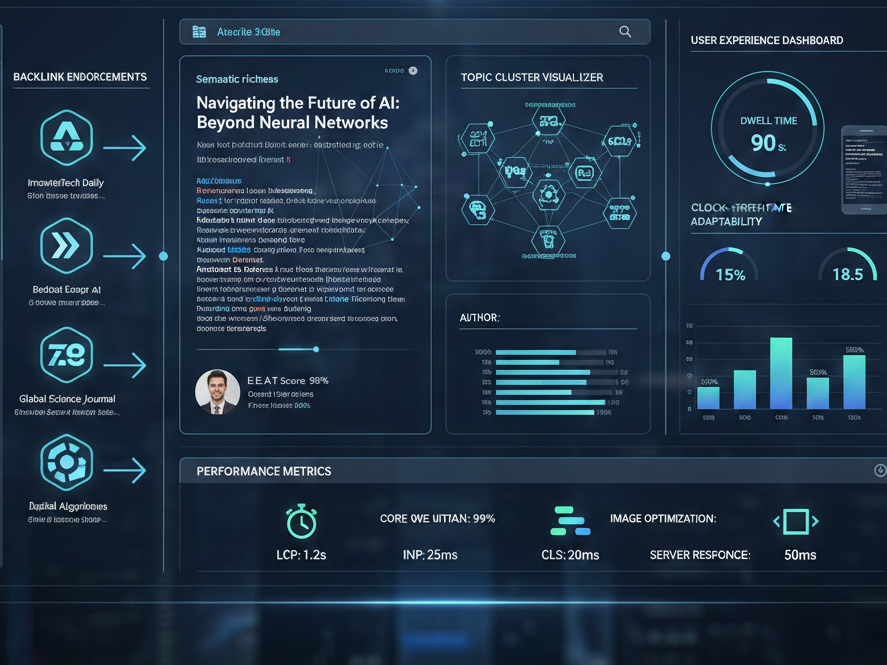
It is not about pursuing algorithms but rather about the realisation that Google is becoming smarter about what constitutes great content and an awesome user experience. Below, therefore, get yourself a cup of coffee, and we are going to dive into the best Google ranking factors that will define your SEO strategy in the year 2026.
The Foundation: Quality Relevant On-Page Content.
It would be a call of a broken record, but the quality and pertinent content on the page is unquestionably the SEO king. By 2026, it will allow Google to read between the lines and interpret the content of what you are saying and writing. No more about the stuffing of keywords, it is about proving one has received experience, is an expert, and can be trusted (E-A-T, and soon to be E-E-A-T: Experience, Expertise, Authoritativeness, and Trustworthiness).
What to focus on:
- Semantic Richness: Google has a natural language processing (NLP) that is unbelievably developed. Your content should be comprehensive in nature as it should include all related entities and concepts that a human expert would bring up in a natural manner. Do not simply aim at one single keyword, but consider the whole cluster of topics.
- User Intent Alignment: Are you really giving the user’s query? Google is hyper-oriented to the intent of a search. You need to make your content directly related to that purpose, whether informational, navigational, transactional, or commercial investigation
- Freshness of Contents and Frequent Updates: old content may be an indication of irrelevance. Although the evergreen content is also important, it is a good idea to update the key pieces with the newest information, statistics, and insights, which will inform Google that this site is a trustworthy and up-to-date one.
- The Keyword Integration (Natural Language): Keywords are not less important; however, they must be incorporated in your text, headings, and meta description in a natural manner. Target long-tail keywords and variations and how people actually search.
The Endorsement: Backlinks Quality.
The backlinks have been and will remain an important indicator of credibility and authority of a site. By 2026, there is even greater focus on quality and not quantity. Google is far better at detecting the schemes of manipulative links and punishing them. A recommendation by a very reputable and relevant site is a huge confidence vote.
What to focus on:
- Relevance is King: A backlink on a site in an entirely unrelated industry will not have much or no weight and can even be viewed as spammy. Emphasise on getting links with sites that are thematically relevant to yours.
- Domain Authority and Trust Flow: The establishment of links with the domain of high authority will give the greatest increase. Ahrefs and Moz tools could also be used to evaluate these metrics.
- atural Link Acquisition: Earned backlinks are the best as they are achieved by making great content that others want to make a natural reference. Consider posting on authoritative websites as a guest, joining the discussion within the industry, and developing resources to share.
- Anchor Text Diversity: Do not have over optimized anchor text. Natural backlink profile will be varied in the types of anchor texts; there will be branded terms, naked URLs, and partial-match keywords.
The Experience: User Experience (UX) Signals
The mission of Google is to offer the most desirable search experience. Of course, much of that is directing users to websites that will provide them with an excellent experience upon clicking. User experience indicators are gaining more and more importance, showing the way visitors are treated to your site.
What to focus on:
- Dwell Time: How long do your users stay on your page once they have clicked through Google? Extended dwell times indicate that the users are interested in and finding your content worthwhile.
- Bounce Rate: Bounce rate (users who leave after seeing one page only) suggests that either the content is not satisfying the users as per their expectations or the user experience is a bad one.
- Click-Through Rate (CTR): The higher the CTR of the search results page, the more Google knows that your title tag and meta description are effective and represent your content in a proper way, which attracts the users to make a click.
- Mobile-First Design: It is no longer an option. As most search activities are performed on mobile phones, there should be complete responsiveness of your web site and provide a superb mobile experience.
- Wiki Navigation and Navigation Structure: The user should be in a position to find what he wants easily. An organized, rational structure of your site and clear navigation menu, which is easy to use and follow, will improve the user experience and will allow easier crawling of your site by search engines.
The Performance: Core Web Vitals (and Beyond).
Core Web Vitals (CWV) are metrics that were introduced in 2021 and they are used to measure the real-world experience of loading performance, interactivity, and visual stability of the user. They will further permeate Google ranking algorithms in 2026, and new metrics may be included with the development of technology. They are not a nice to have anymore, but an essential element of technical SEO.
What to work on to enable Core Web Vitals:
- Largest Contentful Paint (LCP): It is a performance measure of loading.Get your LCP to take place in 2.5 seconds of page loading. The duration of time taken before the biggest content element (such as a hero image or headline) can be seen is this.
- First Input Delay (FID): Interactivity. Attempt to have an FID of less than 100 milliseconds. This is the time that a user waits since the initial interaction with a page (e.g. clicking a button) to actually responding to that interaction (e.g. the browser). (Note: FID is being replaced by INP – Interaction to Next Paint – in March 2024 which measures the latency of all interactions of the user).
- Largest Contentful Paint (LCP): It is a performance measure of loading.A CLS score of below 0.1 is a goal. This is a measure of unintended layout change at the loading stage and that can be extremely annoying to the users.
- Image and videos optimization: compression and correct sizing of any media files are done.Use new image formats such as WebP.
- Introduce lazy loading of images and videos which are not visible at hand.
- Reducing JavaScript and CSS: Redundant or over-optimized JavaScript and CSS can greatly slow down your Web site. Optimize CSS and JavaScript files, and load resources that are not important asynchronously.
- Response Time of the Server: The quick server is a cornerstone to high CWV scores. Select a stable hosting company and think about the usage of Content Delivery Network (CDN).
SEO Successful Tips to be applied in 2026.
The future of SEO in 2026 is obvious: Google needs to provide the most excellent results and user experience. Paying attention to these areas, you not only play by the rules of Google, you are simply making your users a better site, which will eventually translate to improved ranking and, therefore, increased organic traffic.
The following are the actionable tips to be considered:
- Be a Authority on the subject: You should go deep into the subject. Develop detailed, well researched content that covers all the possible aspects of a query of the user. Do not just think of single keywords.
- Earn, Don’t Build, Backlinks: Revolve around making content and materials so incredible that other websites concerned with the topic of your content, which hold authority, would like to link to you automatically. Do actual outreach and community building.
- User Experience Comes First: Provide and always test your site in terms of usability, particularly mobile. Make sure the loading time is fast, the navigation is easy, and the content is interesting and holds the users on your page.
- Master Your Core Web Vitals: Routine audits and improvements of technical performance of your site should become the indisputable element of your SEO strategy. Ladies, use such tools as Google PageSpeed Insights and Lighthouse.
- Accept E-E-A-T: demonstrate your experience, expertise, authoritativeness, and trustworthiness. Provide biographies of the authors, reference materials and establish a good brand image.